


Prof. Mahesh Chand Gupta
The recently concluded AI Impact Summit 2026 in New Delhi marks more than the end of an international conference. It signals the beginning of a new technological journey for India. At a time when the entire world is moving ahead with Artificial Intelligence as the driving force of the future, India has made it clear that it does not intend to lag behind. This message is significant because AI is no longer a technology confined to a single country, a handful of corporations, or wealthy societies. It has become a powerful tool that will deeply influence governance, the economy, society, and individual lives. India wants to move forward in AI—but the real question is whether it will adopt AI merely as a consumer or emerge as a creator and a direction-setter.
At the summit’s inauguration, Prime Minister Narendra Modi presented a vision that essentially extends India’s long-standing emphasis on self-reliance and inclusivity. He stated that AI should not remain the preserve of rich nations alone, but should become a means of “the welfare and happiness of all.” This remark highlights India’s distinct voice in the global technology discourse. It is not just a political statement; it reflects India’s historical approach—whether in its space programme, digital payments, or identity systems—of ultimately connecting every major technology to the life of the common citizen.
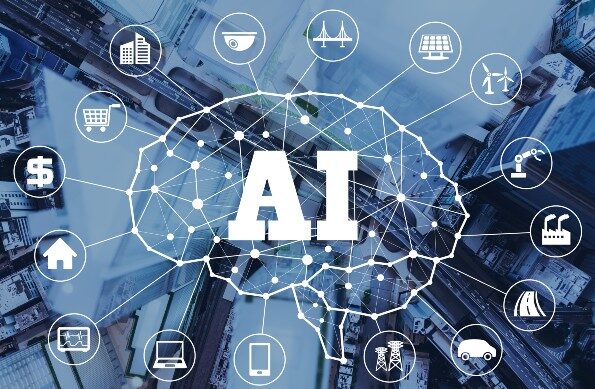
The reality is that AI has already entered almost every sector. From crop prediction in agriculture to disease detection in healthcare; from personalised learning models in education to traffic management and early disaster-warning systems—AI’s role is expanding everywhere. Both developed and developing countries are racing to harness this technology in their own ways. In such a global landscape, if India falls behind in developing its own AI tools, it will inevitably become dependent on others—not only technologically, but also at the policy and strategic levels. In this sense, the AI Impact Summit has emerged as a roadmap for India, indicating the direction and pace at which the country must move forward.
However, the real test of any grand technological dream lies in its ability to translate into reality on the ground. The government’s initiatives around AI should not be underestimated. Efforts are visible across research, startups, skill development, and policy-making. Yet, there is also a bitter truth in the Indian system: often, the benefits of schemes are cornered by a few “quick grabbers” long before they reach the last person in the line. With a complex and powerful technology like AI, this risk becomes even greater. If the benefits of AI remain confined to big cities, large corporations, and a limited section of society, its very purpose will be defeated.
This is why AI experts, policymakers, ministries, and the bureaucracy must seriously reflect on how the common citizen can be directly connected to AI—and how they can receive tangible benefits from it. For instance, if AI can help detect leakages and pilferage in the public distribution system, it can become a strong weapon against hunger. If AI can signal early warning signs of decline in vaccination coverage or primary healthcare services, timely intervention becomes possible. If weather and geological data analysis can predict areas vulnerable to natural disasters, the loss of life and property can be significantly reduced.
Alongside these possibilities, however, questions of monitoring and accountability are equally important. We have seen how well-intentioned schemes often change character while moving from paper to the ground. In India, new technologies are welcomed with enthusiasm, but over time, due to lack of oversight and accountability, they tend to lose their edge. In the case of AI, such negligence could prove costly. We must not only examine what we are doing, but also closely watch what the world is doing—and learn from it. In an era of global competition, there is no room for complacency. At the same time, the risks of AI misuse cannot be ignored. Deepfakes, digital fraud, violations of privacy, and misinformation represent its darker side. The government has announced steps to curb these threats, which is welcome—but half-hearted measures will not suffice. A strong legal framework, robust technical solutions, and widespread public awareness are essential.
Opposition parties have raised objections regarding the AI Impact Summit. In a democracy, dissent is natural. However, if every new technology and every long-term vision is opposed merely for the sake of opposition, national interest suffers. Had major post-Independence initiatives—such as dams, the space programme, the computer revolution, or digital infrastructure—been consistently resisted, would the country look the way it does today? The dream of making India a developed nation by 2047 can only be realised if the steps taken in this direction enjoy broad consensus and collective participation. The opposition must reflect on this.
The greatest hope surrounding AI is that it can become a powerful engine of future progress. It can make administration more transparent, services faster and more accurate, and help optimise the use of resources. But this trust will endure only if ordinary citizens genuinely feel that AI is improving their everyday lives. The AI Impact Summit does not merely offer India an opportunity—it also holds up a mirror. What we make of it is now up to us. With the right policies, investments, and intentions, India can provide leadership to the world. At the same time, there is a clear warning: if we fail to keep the common citizen at the centre, and if we ignore oversight and ethics, this very technology could deepen existing inequalities. India’s strength has always been its human-centric outlook. If AI is harnessed with that same spirit, it can truly become the foundation of a developed India.
(The author is a noted educationist, writer, and speaker. He taught at the University of Delhi for 44 years.)


