


Dr. Reyaz Ahmad
When Pain Becomes Personal: Why We Understand Others Only After We’ve Been There
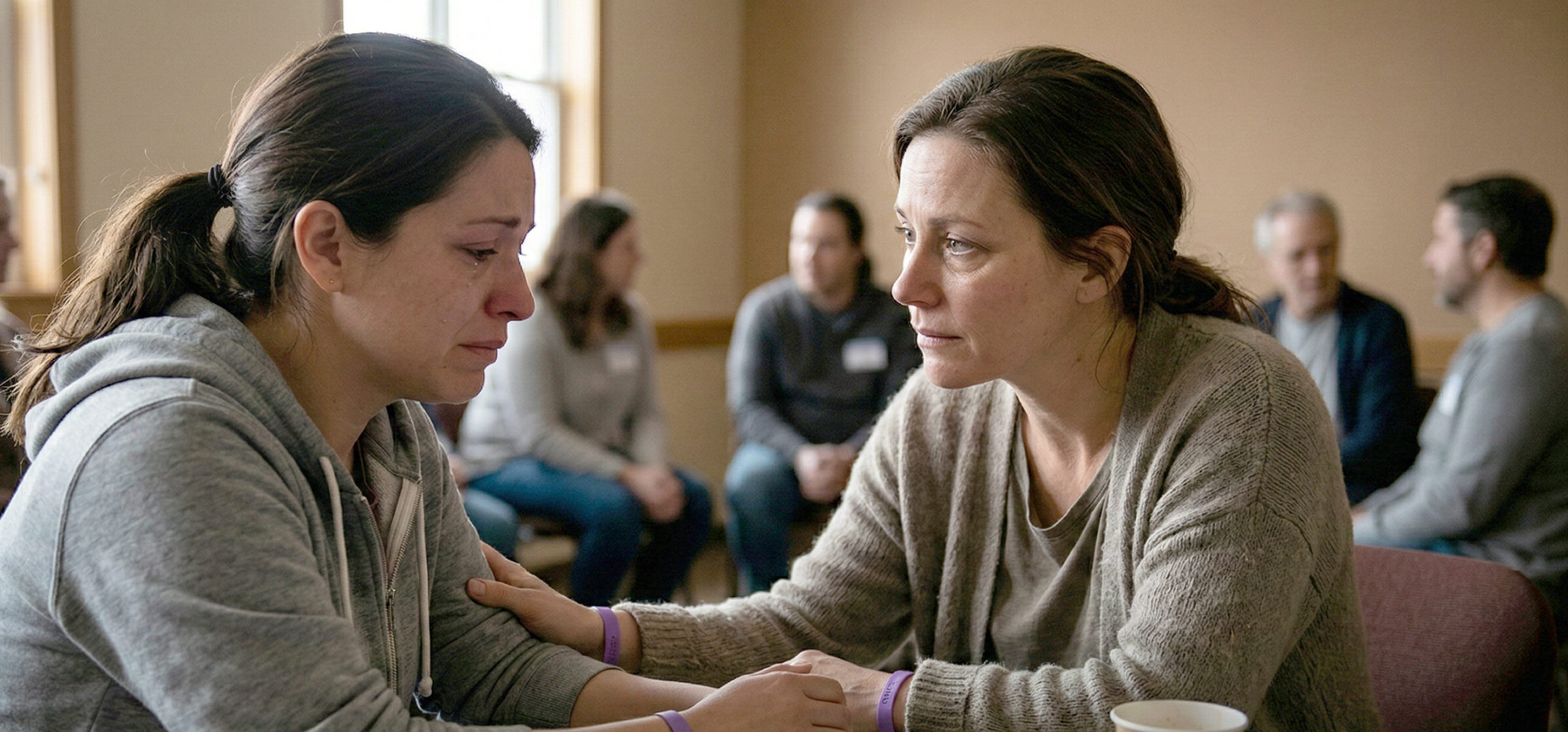
There is a common human confession—often spoken with regret: “Now I understand… because it happened to me.”
This is not merely a moral statement; it is a psychological pattern, a philosophical problem, a logical limitation, and a spiritual lesson. The same truth appears across disciplines: people grasp another person’s burden most deeply when they are placed in a similar situation.
Below is a multi-lens explanation—psychological, philosophical, logical, and religious—of why this happens, and what it demands from us.
1) Psychological explanation: the empathy gap and the limits of imagination
a) The “empathy gap”
Psychology recognizes that our compassion is often constrained by our current emotional state. When we are safe, healthy, comfortable, or socially secure, we underestimate how fear, pain, hunger, debt, grief, or humiliation can dominate someone’s decisions. This is why advice from a comfortable position often sounds simplistic to the suffering person: “Just be patient,” “Just leave,” “Just work harder.”
b) Experience activates emotional understanding, not just intellectual knowledge
You can know about anxiety, infertility, chronic pain, discrimination, unemployment, or caregiving—but knowing about a thing is not the same as knowing through a thing. Lived experience adds:
• bodily memory (stress, fatigue, insomnia),
• emotional depth (helplessness, shame, dread),
• and social reality (people’s judgments, loneliness, stigma).
That is why empathy often deepens sharply after personal hardship: experience turns abstract information into felt reality.
c) Fundamental attribution error: we misjudge others as “weak” instead of “under pressure”
Humans naturally explain their own failures by circumstances (“I was overwhelmed”) but explain others’ failures by character (“they are irresponsible”). Once we enter the same circumstances, the story flips: we recognize that pressure can crush even strong people.
d) Familiarity and similarity bias
We empathize more with people who resemble us or whose suffering we can easily imagine. Similar experience reduces psychological distance. When the distance collapses, compassion rises.
2) Philosophical explanation: “knowing” is not only thinking—it is also being
a) The difference between propositional knowledge and experiential knowledge
Philosophy distinguishes:
• Knowing that (facts, concepts, definitions), and
• Knowing what it is like (qualitative experience).
A person may “know that” grief hurts, but only the bereaved person knows the texture of grief—how time slows, how ordinary life becomes heavy, how memories become wounds. Philosophically, experience produces a kind of knowledge that language cannot fully transfer.
b) Moral imagination is real, but limited
Ethics often calls us to imagine ourselves in another’s place. Yet moral imagination has a ceiling. Without experience, we frequently:
• minimize how hard it is,
• romanticize suffering (“it makes you stronger”),
• or moralize it (“they deserve it”).
Experience interrupts these illusions.
c) Existential insight: suffering reveals the hidden structure of life
Many philosophical traditions—from Stoicism to existentialism—argue that comfort can make us blind. Hardship exposes dependency, vulnerability, and the fragility of control. When we suffer, we stop speaking like judges and start speaking like humans.
3) Logical explanation: incomplete information produces incomplete judgment
From a logical standpoint, misunderstanding others is often an information problem.
a) You can’t compute what you don’t measure
If a person lacks key variables—trauma history, financial constraints, family dynamics, mental health, workplace politics, social stigma—then their “judgment” is based on an incomplete model. The conclusion may be logically consistent within that small model, yet still false in reality.
A simple logic analogy:
• Premise set A (limited): “If someone is late repeatedly, they are careless.”
• Premise set B (full): “They are late because they take a parent to dialysis daily, and transport is unpredictable.”
Same behaviour, different premises, different conclusion.
b) “If it were me…” is often a faulty simulation
People run a mental simulation: “If I were in their place, I would do X.”
But the simulation is invalid if you import your own resources—confidence, money, health, family support—into their scenario. The correct simulation is:
“If I had their constraints, history, and risks, what would I do?”
That is a much harder calculation—and usually more humble.
c) Hidden costs and unseen pressures
Many human decisions are made under invisible costs: shame, fear, dependency, social punishment, legal risk, or emotional exhaustion. When those costs become visible through experience, our reasoning becomes less harsh and more accurate.
4) Religious explanation: trials teach humility; compassion is demanded before experience
Religiously, this idea appears as both a description of human weakness and a command to rise above it.
a) Humans are tested to learn mercy, not superiority
Most religious traditions interpret suffering as a tool that can soften arrogance. Trials remind people that they are not invincible—and that today’s secure person may be tomorrow’s needy person. This produces humility: a spiritual antidote to judgmentalism.
b) Compassion is not optional; it is worship in action
Across religions, ethical life is measured by how we treat the vulnerable:
• caring for the poor, sick, and orphan,
• respecting the dignity of the weak,
• and restraining the impulse to mock or condemn.
In Islamic ethics, for example, mercy (rahmah), justice (‘adl), and avoiding suspicion and contempt are central moral duties. In Christian teaching, love of neighbor and mercy are core. In Buddhism, compassion (karuṇā) is a primary virtue. In Hindu traditions, dayā (compassion) and seva (service) are central. The shared moral thrust is clear: you are not allowed to wait for personal suffering before becoming humane.
c) The “golden rule” logic: act as you would want to be treated
Religions repeatedly teach: don’t measure people from your comfort; measure from your conscience. The spiritual standard is to treat others with the care you would want if roles were reversed—whether or not you have personally endured that hardship.
d) A warning against arrogance
Religiously, the person who says, “That could never happen to me,” is warned: life can flip quickly. Therefore, empathy is not only kindness; it is spiritual realism.
Bringing the four lenses together
• Psychology says: empathy is limited by imagination and emotional distance.
• Philosophy says: lived experience produces a form of knowledge arguments cannot replace.
• Logic says: judgments fail when the model lacks hidden variables.
• Religion says: hardship can awaken mercy—but you must choose compassion even before hardship comes.
So yes, people often understand others only when they face similar situations. But the higher lesson is this:
Maturity is to understand before you are forced to.
Practical ways to practice “pre-experience empathy”
1. Replace judgment with inquiry: “What might I be missing?”
2. Assume hidden constraints: most struggles are partly invisible.
3. Speak less, listen more: suffering people need presence before solutions.
4. Avoid moral arrogance: today’s stability is not a permanent entitlement.
5. Turn empathy into action: support, accommodation, advocacy, service.
Author Can Be Mailed At reyaz56@gmail.com


