


Mohammad Hanief
Every winter, as vast stretches of Central Asia, Siberia and Europe succumb to freezing temperatures, the Kashmir Valley quietly assumes a global ecological role. Its wetlands, lakes and marshes become temporary homes for migratory birds that traverse thousands of kilometres in search of food, safety and moderate climatic conditions. This annual avian influx, one of the most remarkable natural phenomena in the region, once again unfolds across Kashmir’s landscape, reaffirming the valley’s importance on the international migratory map while also highlighting the environmental pressures that threaten this delicate balance.
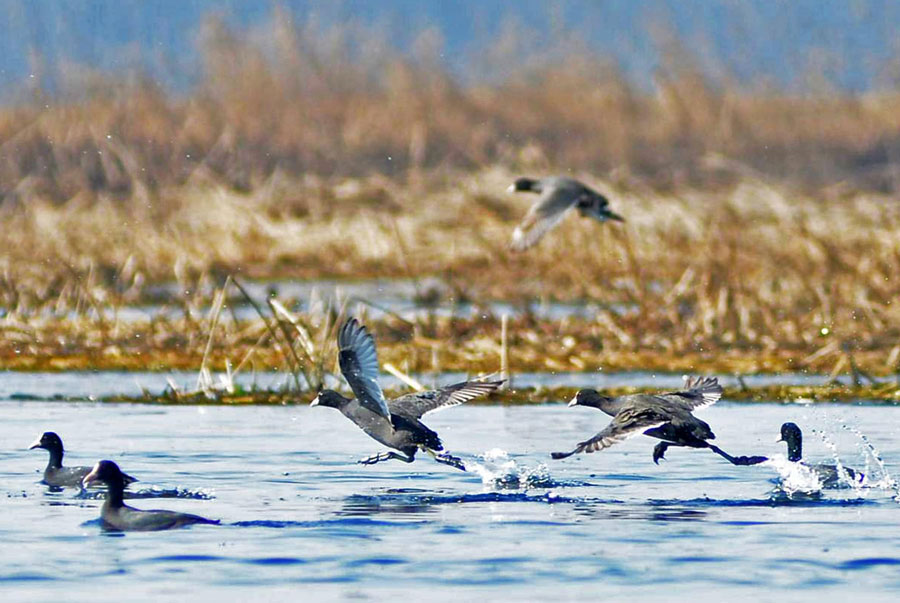
From early October onward, wetlands such as Hokersar, Haigam, Shalabugh, Mirgund, Dal Lake and Wular Lake begin to witness the gradual arrival of waterfowl. By the onset of winter, these habitats are alive with movement, sound and colour as birds settle into their seasonal refuge. Species commonly recorded include mallards, northern pintails, common teals, gadwalls, tufted ducks, coots, greylag geese and bar-headed geese, along with several species of gulls and waders. For months, these wetlands provide sustenance and shelter before the birds begin their return journey in spring.
Recent seasonal assessments indicate that Kashmir’s wetlands have collectively hosted more than a million migratory birds, a figure that reflects a steady rise observed over the past several years. The Asian Waterbird Census and local wildlife surveys have recorded an encouraging increase in both population numbers and species diversity. This resurgence is widely attributed to sustained wetland management initiatives, improved water retention mechanisms and increased surveillance against illegal hunting and encroachment.
Wular Lake, one of Asia’s largest freshwater lakes and a designated Ramsar site, continues to serve as a crucial wintering ground. Its vast open waters and surrounding marshes support large congregations of birds, particularly geese and ducks. Dal Lake, despite urban pressures, remains an important habitat due to its complex mosaic of open water, reed beds and floating vegetation. Hokersar wetland, often described as the gateway for migratory birds entering the valley, retains its ecological significance, especially during early winter when bird arrivals peak.
The importance of these wetlands extends beyond seasonal migration. They act as natural flood buffers, groundwater recharge zones and biodiversity reservoirs. For migratory birds, they offer not only food but also relative safety from predators and extreme weather. The presence of healthy bird populations is therefore considered a key indicator of wetland health and water quality.
In recent years, conservation efforts across Kashmir have intensified, yielding visible results. Measures such as controlled water regulation, selective desilting and habitat restoration have helped improve the carrying capacity of several wetlands. Surveillance infrastructure has been strengthened, with night patrols and monitoring systems deployed to curb poaching, a practice that once posed a serious threat to migratory birds in the region. Awareness campaigns targeting local communities have also contributed to greater public participation in conservation.
At the same time, the current scenario reveals contrasting realities. While some wetlands report higher bird concentrations, others are experiencing stress due to environmental and climatic factors. Prolonged dry spells and erratic precipitation patterns have affected water levels in certain marshes, particularly Hokersar, where reduced inflows have limited suitable foraging areas. Such fluctuations directly influence bird distribution, forcing species to either relocate within the valley or shorten their stay.
Climate variability has emerged as a critical concern. Changing snowfall patterns in the upper catchments and inconsistent rainfall have altered hydrological cycles that wetlands depend upon. Reduced winter precipitation not only affects water availability but also impacts aquatic vegetation, a primary food source for many migratory species. Over time, these shifts could influence long-established migration routes and seasonal timings.
Human pressure remains another major challenge. Encroachment, pollution from untreated sewage, agricultural runoff and unregulated development continue to threaten wetland ecosystems. Urban expansion around Dal Lake and Wular Lake has increased nutrient loading, leading to eutrophication and loss of open water. In rural wetlands, land reclamation and silt deposition have reduced marshy areas critical for feeding and nesting.
Despite legal protections and Ramsar recognition for several sites, enforcement gaps persist. Conservationists emphasize that wetland protection cannot succeed through isolated interventions alone. It requires integrated land-use planning, strict regulation of waste disposal, and coordinated water management across river basins. Without such measures, short-term gains in bird numbers may not translate into long-term ecological stability.
The annual arrival of migratory birds also carries socio-economic significance. Birdwatching and nature tourism have gained momentum, drawing photographers, researchers and visitors to Kashmir’s wetlands. This growing interest has the potential to support local livelihoods through eco-tourism, provided it is managed responsibly. Infrastructure such as observation decks, guided trails and interpretation centres is increasingly being viewed as a means to balance conservation with community benefit.
Educational initiatives have further strengthened this link. Schools, colleges and environmental groups are now actively involved in bird monitoring and wetland clean-up drives. Such engagement fosters environmental stewardship among younger generations, reinforcing the idea that wildlife conservation is a shared responsibility rather than an isolated administrative task.
Scientifically, migratory birds serve as living indicators of broader ecological changes. Variations in their numbers, health and behaviour often signal shifts in climate, water quality and habitat integrity. Continuous monitoring through structured censuses and research programmes is therefore essential to understanding long-term trends and planning adaptive conservation strategies.
Looking ahead, the future of Kashmir’s migratory birds will largely depend on the resilience of its wetlands. Strengthening water security, restoring degraded marshes and curbing pollution must remain top priorities. Equally important is the need to align development goals with ecological limits, ensuring that infrastructure expansion does not undermine natural systems that have sustained both wildlife and human communities for centuries.
The winter skies over Kashmir, streaked with the silhouettes of migrating birds, remain one of the valley’s most enduring natural spectacles. Each arrival is a testament to the valley’s ecological relevance on a global scale. Yet, it is also a reminder that this ancient cycle is fragile. Preserving it demands sustained commitment, informed policy and collective action.
As another migration season unfolds, Kashmir stands at a crossroads. Its wetlands can either continue to serve as sanctuaries for millions of birds or slowly lose their vitality under mounting pressure. The choices made today will determine whether future winters will still echo with the calls of distant lands carried on wings across continents.
The author is a senior analyst and can be mailed at m.hanief@gmail.com
X/Twitter: @haniefmha


