


Dr. Reyaz Ahmad
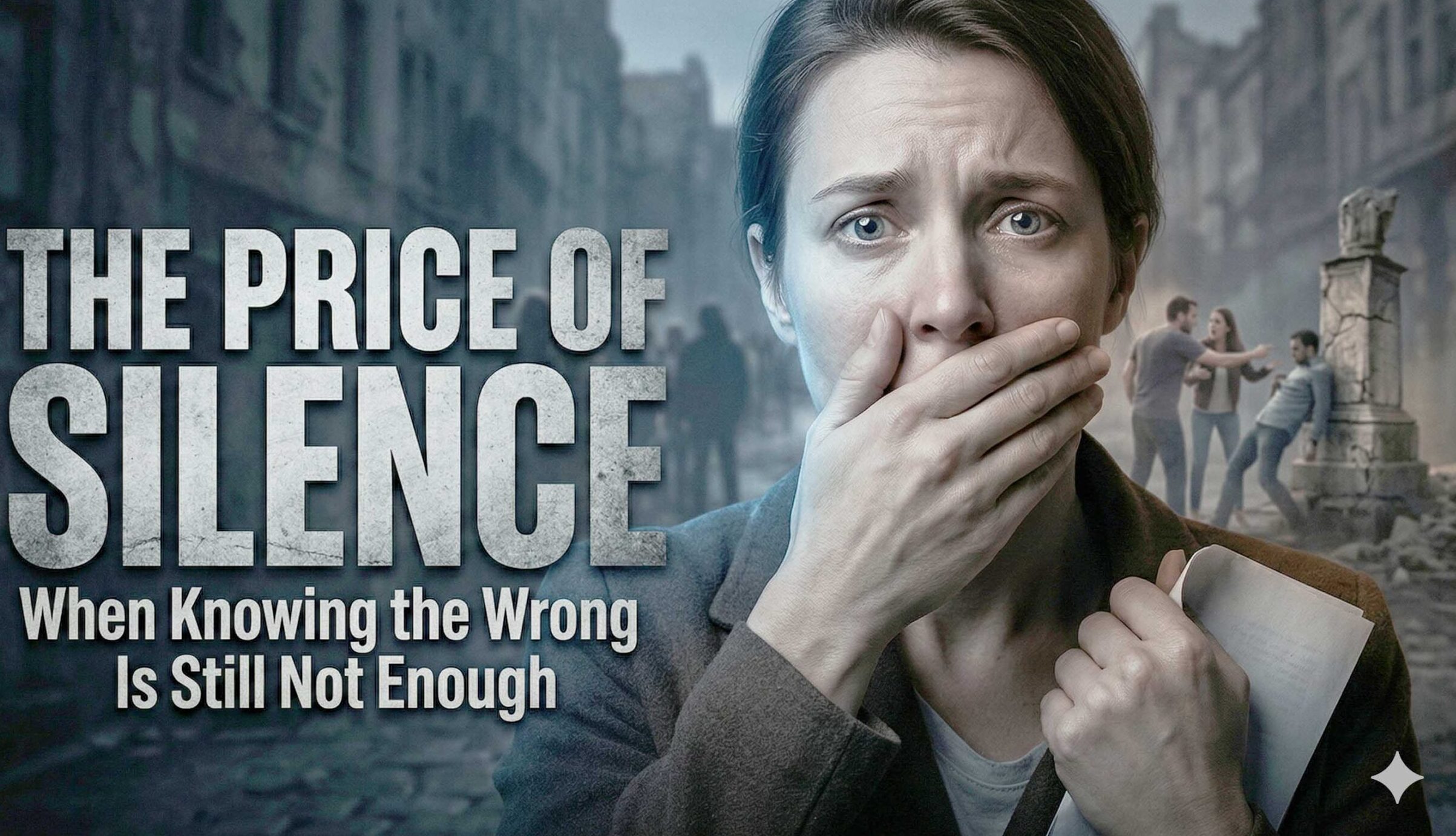
There are moments in life when the heart knows something is wrong long before the mouth is willing to say it. A student watches a classmate being humiliated but looks away. An employee notices unsafe practices in the office but stays quiet. A neighbour hears of corruption, injustice, or abuse, yet tells himself that someone else will speak. Silence, in such moments, does not always come from agreement. More often, it comes from fear, confusion, helplessness, and the heavy pressure of social life. That human tendency—to remain silent even when we know something is wrong—reveals a troubling truth about individuals and societies alike.
At first glance, silence may appear harmless. After all, no words were spoken, no action was taken, and no visible harm was done by the silent person himself. But silence is rarely neutral. In many situations, silence becomes a silent partner of wrongdoing. It gives space to injustice, protection to the powerful, and loneliness to the victim. It allows what is wrong to survive longer than it should.
One of the strongest reasons people remain silent is fear. Human beings are social creatures. They want acceptance, belonging, and safety. Speaking up often threatens all three. A person may fear losing friendships, being mocked, damaging career prospects, or facing punishment. In some cases, the fear is even more serious—retaliation, public shaming, or physical danger. Because of this, many people choose silence not because they lack moral sense, but because they feel the cost of truth may be too high.
Consider a workplace example. An engineer notices that safety rules are being ignored to save time and money. He understands that one day this negligence could cause serious harm. Yet he remains silent. Why? Because he fears being labelled difficult, disloyal, or uncooperative. He worries that his promotion may disappear, that his colleagues may isolate him, or that his supervisor may punish him. So, he says nothing. Days pass. The shortcuts continue. Eventually, an accident happens. What began as silence out of fear ends as harm to many. This example shows that silence often protects short-term comfort while creating long-term disaster.
There is also the power of social conformity. People often look at others to decide how to behave. If everyone else appears calm, silent, or accepting, an individual assumes that perhaps the matter is not serious, or at least not serious enough to challenge. This is one of the most dangerous illusions in group life. Many people may be uncomfortable, but because nobody speaks, each person thinks he is alone in his discomfort.
Imagine a group of friends where harmful jokes about someone’s background, appearance, or weakness become normal. Several people feel disturbed, but no one objects. Each assumes the others are fine with it. Over time, the behaviour becomes part of the group culture. The one who is targeted suffers quietly, and those who are uncomfortable begin to lose their own moral clarity. Yet often it takes just one person to say, “This is not right,” for others to admit that they felt the same. Silence creates a false consensus; courage can break it.
Another reason for silence is the diffusion of responsibility. In a crowd, people feel less personally responsible. When many are watching, each individual assumes someone else will act. This happens in offices, classrooms, communities, and even entire nations. The problem is obvious, but responsibility becomes invisible.
A neighbourhood may know that a local authority is corrupt. People may complain privately in homes and tea shops, but publicly they do nothing. Each person thinks: “Someone more powerful will deal with it,” or “Why should I take the risk alone?” As a result, corruption grows stronger precisely because everyone waits for someone else. Wrongdoing flourishes most easily where responsibility is shared but courage is absent.
Sometimes silence comes from internal conflict. A person may know something is wrong, yet admitting it would force him to confront uncomfortable truths about himself, his group, or his past decisions. It is easier to stay quiet than to revise one’s beliefs, challenge one’s loyalties, or accept one’s own earlier complicity. This is the psychology of moral discomfort. Silence becomes a shield against self-examination.
For example, a teacher may realize that a long-accepted practice in the institution is unfair to weaker students. But to speak up would mean admitting that for years he too went along with the system. Rather than face that uncomfortable reality, he remains silent. In such cases, silence is not only fear of others; it is also fear of oneself.
Hierarchy also plays a major role. People lower in power often hesitate to speak against those above them. An intern remains silent before a manager. A junior staff member stays quiet before a dean. A poor worker fears the word of a wealthy employer. A marginalized voice expects disbelief even before it speaks. In such situations, silence is deeply tied to power. The wrong continues because the person who sees it feels too small to challenge the one who benefits from it.
Yet perhaps the saddest form of silence is learned helplessness. When people repeatedly see that speaking changes nothing, they lose faith in action itself. They stop resisting not because they approve, but because they no longer believe resistance matters. Silence then becomes habit. It settles into the soul. A person who once felt anger begins to feel resignation. A society that once reacted begins to normalize decay.
The harms of such silence are enormous.
First, silence empowers wrongdoing. When no one objects, the wrongdoer becomes bolder. He begins to believe he is safe, accepted, or untouchable.
Second, silence isolates the victim. The person suffering injustice does not only feel the pain of the act itself; he also feels abandoned by those who saw and said nothing. This emotional abandonment can be more painful than the original insult.
Third, silence corrupts moral character. Every time a person suppresses truth for convenience, fear, or conformity, a part of his conscience weakens. Over time, silence can turn a morally sensitive person into a morally passive one.
Fourth, silence damages institutions. Families, schools, offices, and governments all weaken when people stop speaking honestly. Problems that could have been corrected early become crises later.
Finally, silence harms society as a whole. A culture of silence is a culture where truth becomes expensive, courage becomes rare, and injustice becomes ordinary. Such a society may appear outwardly peaceful, but underneath it is morally unstable.
This is why the conclusion must be clear: the harm of silence is never limited to one moment. It spreads. It protects the wrong, punishes the vulnerable, weakens conscience, and normalizes injustice. What begins as one person’s quiet fear can become a community’s permanent wound. If wrong is allowed to grow in the shelter of silence, the final cost is paid by everyone. A healthy society is not built only by good laws or powerful leaders; it is built by ordinary people who refuse to let fear become permission for wrong. Speaking up may carry risk, but silence often carries ruin.
Author Can Be Mailed At reyaz56@gmail.com


