


Mohammad Hanief
As Teacher’s Day was celebrated on September 5, the occasion has acquired a new significance in an age when artificial intelligence is rapidly transforming education. The classroom of today is no longer confined to textbooks, blackboards and conventional teaching methods. Students have access to vast digital resources, online learning platforms and generative AI tools capable of explaining concepts, creating content and assisting with research within seconds. In this rapidly changing environment, the central question is not whether AI will enter education, but how teachers can use it to make education more meaningful while ensuring that the human purpose of learning remains intact.
India has one of the world’s largest education systems, with millions of students, teachers and schools. Education has long been recognised as a major instrument of economic development, social mobility and nation-building. The National Education Policy 2020 seeks to transform the system by placing greater emphasis on access, equity, quality, affordability and accountability, while encouraging critical thinking, problem-solving, communication, creativity, empathy, teamwork and leadership.
The emergence of AI has added a powerful new dimension to these objectives. In 2026, artificial intelligence is moving steadily from experimentation into mainstream educational policy and practice. The Ministry of Education has introduced a dedicated Computational Thinking and Artificial Intelligence curriculum for Classes III to VIII from the academic session 2026-27, with emphasis on logical reasoning, pattern recognition, algorithmic thinking, data literacy and responsible use of AI.
This development represents an important shift in the role of teachers. In the traditional classroom, teachers were often the primary source of information. Today, information is available everywhere. A student can search the internet or use an AI tool to obtain an explanation almost instantly. Consequently, the teacher’s importance is no longer determined by the amount of information he or she can provide, but by the ability to help students understand, evaluate and apply information.
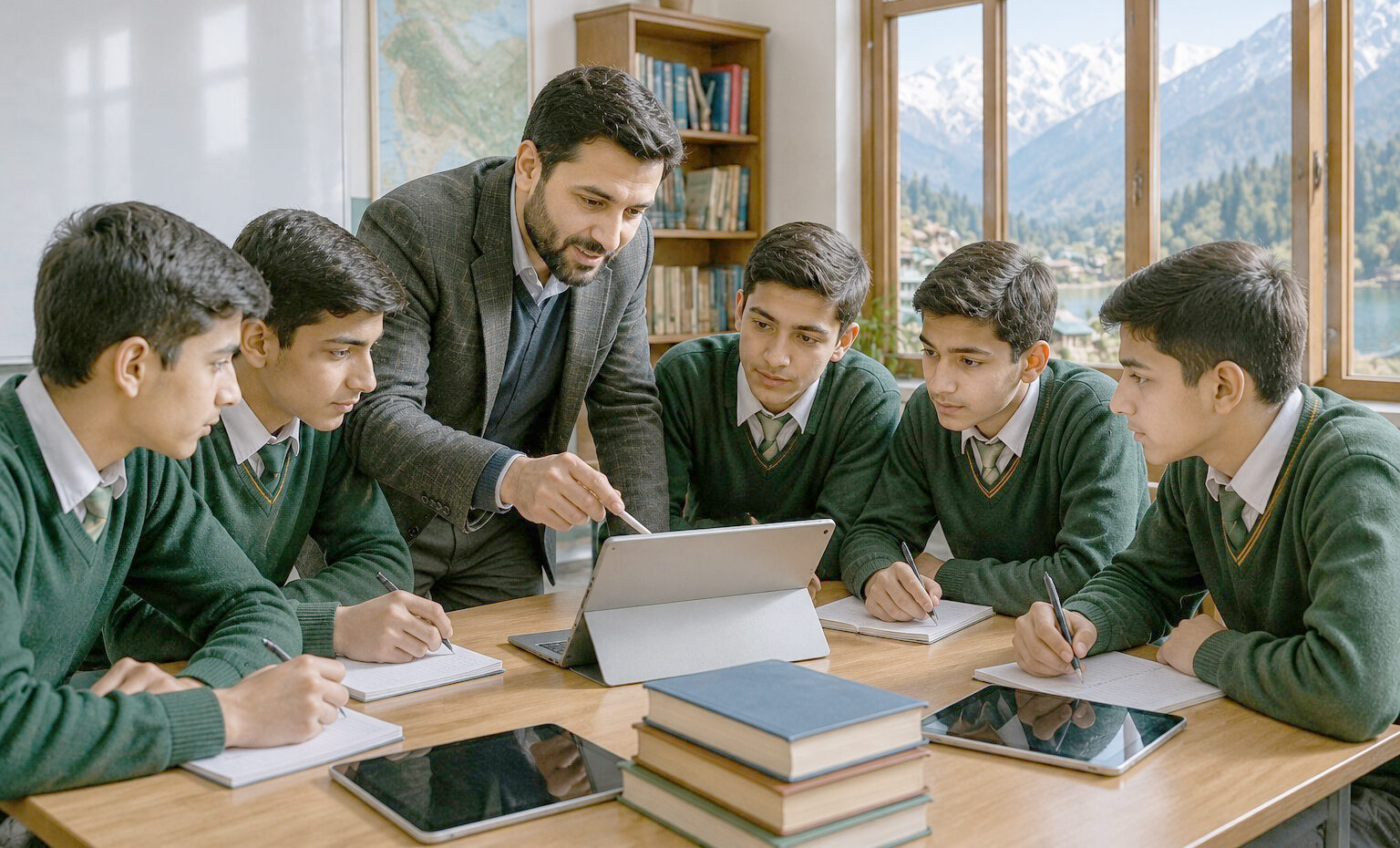
The teacher of the AI age must therefore become more of a mentor, facilitator and intellectual guide. AI can provide an answer, but teachers can help students understand whether that answer is correct. AI can generate an essay, but teachers can encourage students to develop their own arguments. AI can explain a scientific concept, but teachers can stimulate curiosity by asking students to examine its practical implications. In this sense, artificial intelligence should strengthen the teacher’s capacity rather than diminish it.
The potential benefits are considerable. AI can assist teachers in preparing lesson plans, generating exercises, adapting learning material to different ability levels and providing additional explanations for students who require support. It can help make learning more personalised and can potentially reduce some repetitive academic and administrative work. The Ministry of Education has itself identified personalised learning, intelligent assessment, adaptive instruction and data-driven decision-making among the areas where AI can transform education.
However, technology cannot address every dimension of education. A classroom is not simply a place where information is transferred. It is a social environment where children develop confidence, discipline, empathy, communication skills and a sense of responsibility. A teacher can notice when a student is losing interest, struggling emotionally or lacking confidence. Such human understanding cannot be fully replicated by an algorithm.
This makes the emotional and moral responsibilities of teachers particularly important. As children spend more time with digital devices and artificial intelligence, teachers must ensure that technology does not replace human interaction. Students need to learn how to collaborate, communicate, listen to others and understand different perspectives. The development of social and emotional abilities remains an essential part of education, consistent with the holistic vision of NEP 2020.
AI also presents a serious challenge to academic integrity. Students can now use generative AI to prepare assignments, essays, presentations and answers. If educational assessment continues to depend primarily on memorisation and conventional written assignments, distinguishing genuine learning from machine-generated work will become increasingly difficult. Teachers will therefore need to place greater emphasis on classroom discussions, projects, presentations, practical activities, critical reasoning and application of knowledge.
The objective should not be to prohibit students from using AI. Instead, they should be taught responsible AI literacy. Students must understand that technology is a tool for learning, not a substitute for thinking. They need to learn how to verify information, recognise errors, protect personal data, respect intellectual property and use AI ethically. The current AI curriculum being introduced in schools places explicit emphasis on responsible and ethical AI use, reflecting this changing educational requirement.
For teachers to fulfil this expanded role, professional development is essential. Teachers cannot be expected to integrate rapidly evolving technology into classrooms without appropriate training. This transformation also requires a change in the culture of teaching. Teachers themselves must become lifelong learners. The educator of the future will need familiarity with AI tools, digital resources, cybersecurity, data privacy and emerging technologies while retaining strong subject knowledge and pedagogical skills. Technology changes rapidly, but the fundamental purpose of teaching remains constant: helping students become capable and responsible human beings.
The original education framework rightly emphasises that improving education requires greater investment, stronger teacher quality, digital education, vocational learning, parental participation and wider access to quality education. AI should become another instrument within this broader transformation, not a substitute for these fundamental requirements.
The changing world of work makes this transformation even more urgent. Artificial intelligence, automation, robotics and data-driven technologies are reshaping employment and creating new professional opportunities. Students entering the workforce will need technological awareness, but they will also require creativity, adaptability, communication, analytical reasoning and the capacity to learn continuously. Teachers have the responsibility of developing these abilities rather than preparing students merely to pass examinations.
NEP 2020’s emphasis on reducing excessive curriculum load and creating greater space for discussion, analysis and holistic learning is particularly relevant in the AI era. When machines can quickly retrieve and generate information, education must increasingly focus on what machines cannot easily provide: judgement, imagination, ethical reasoning, empathy and wisdom.
Technology may provide new tools, but teachers determine how those tools are used. A poorly prepared teacher with sophisticated technology cannot create meaningful learning, while an empowered teacher can use even simple technology creatively to improve understanding.
Teacher’s Day should therefore be an occasion to reconsider the status and responsibilities of educators in this new era. Teachers need professional respect, continuous training, appropriate resources and sufficient freedom to experiment with new teaching methods. They should not be expected merely to adapt to technological change; they should be supported in leading it.
The future classroom may contain artificial intelligence assistants, smart learning platforms and personalised digital resources, but the teacher will remain its human centre. AI can process information, identify patterns and generate responses, but teachers inspire curiosity, develop character and understand the individual behind the student’s performance.
The real challenge before education is therefore not choosing between teachers and AI. It is creating a partnership in which artificial intelligence enhances teaching while teachers preserve the human purpose of education. As India moves towards a knowledge-driven and technology-enabled society, the role of the teacher will evolve from being primarily a transmitter of information to becoming a designer of learning, mentor of young minds and guide through an increasingly complex digital world.
AI may transform the classroom, but teachers will continue to transform lives.
The author is a senior analyst and environmentalist. Feedback can be sent to m.hanief@gmail.com. Twitter/X: @haniefmha


