


Mohammad Hanief
Education is often judged by examination results, grades and classroom performance. Yet, these measures do not always reflect a child’s true abilities, creativity or potential. For children with learning disabilities, the pressure to meet conventional academic expectations can turn school into a place of anxiety rather than discovery. Difficulties with reading, writing, spelling or mathematics may affect their confidence, particularly when their struggles are misunderstood as carelessness or a lack of effort. In this context, co-curricular activities can play a transformative role by helping children recognise their strengths, express their abilities and develop a stronger sense of belonging.
Learning disabilities, including dyslexia, dysgraphia and dyscalculia, affect particular areas of learning and vary from child to child. They do not automatically indicate low intelligence or a lack of ambition. A student who struggles to write a paragraph may possess remarkable artistic talent, while another who finds calculations difficult may excel in music, sport, drama or practical work. When education focuses too narrowly on marks, such abilities can remain unnoticed. A more inclusive approach recognises that children learn differently and deserve opportunities to succeed in different ways.
Co-curricular activities are not merely recreational additions to the school timetable. Sports, drawing, painting, music, dance, drama, gardening, storytelling, handicrafts and cultural programmes can contribute significantly to a child’s emotional, social and intellectual development. They encourage teamwork, communication, discipline, creativity and problem-solving while allowing children to learn through experience rather than relying exclusively on written assignments and examinations.
For a child who repeatedly faces academic difficulties, achieving something in another field can be deeply encouraging. Completing a painting, learning a dance sequence, participating in a school play or contributing to a sports team can provide a sense of accomplishment that conventional assessments may fail to capture. Appreciation from teachers and classmates can help children understand that their abilities matter and that they have a valuable place in the school community.
Such experiences are particularly important because repeated failure and negative comparisons can weaken a child’s self-esteem. When students are given opportunities to demonstrate their strengths, they are more likely to participate, build friendships and approach challenges with greater confidence. Co-curricular activities therefore support not only talent development but also emotional well-being and social inclusion.
India’s educational framework increasingly recognises the need to make education accessible and meaningful for children with disabilities. The National Education Policy 2020 emphasises equitable and inclusive education, while the Rights of Persons with Disabilities Act, 2016, provides a legal framework for inclusive education and appropriate support. These commitments must extend beyond classroom teaching to sports, assemblies, excursions, competitions and cultural events.
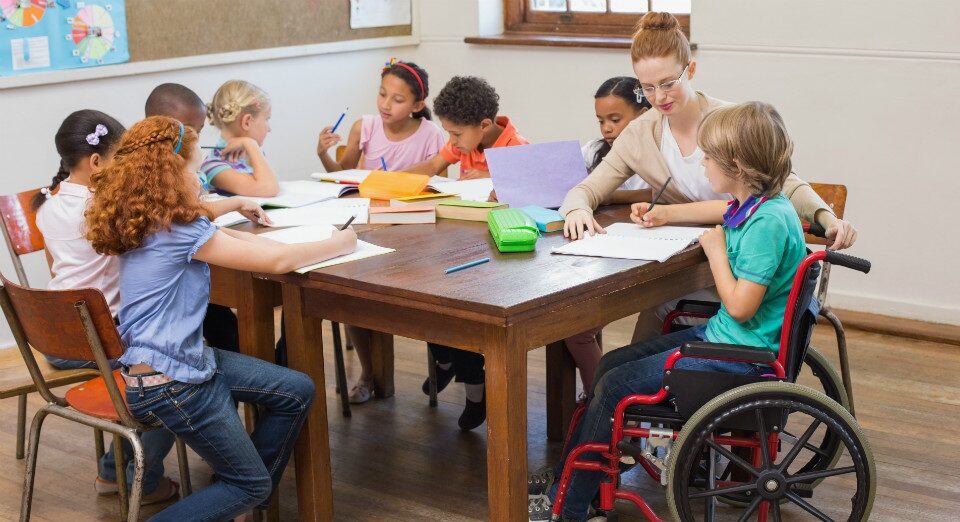
Enrolling a child in a mainstream school does not, by itself, guarantee inclusion. A student may still be left out because instructions are difficult to follow, activities are organised inflexibly, materials are unsuitable or adults underestimate the child’s abilities. Genuine inclusion requires schools to identify and remove these barriers. Clear instructions, demonstrations, visual aids, flexible timing and adapted equipment can help more children participate meaningfully.
The objective should not be to separate children with learning disabilities from their peers unnecessarily, but to create an environment in which differences are understood and individual needs are respected. Every child should have a fair chance to participate without fear of ridicule, embarrassment or discrimination.
Teachers are central to creating such an environment. Understanding a child’s interests, learning needs and individual strengths is the first step towards meaningful participation. Some students may benefit from visual demonstrations, step-by-step guidance or activities involving movement and practical experience. Others may require additional time, peer support or alternative ways of showing what they can do.
The emphasis should be on effort, progress and enjoyment rather than perfection. Children should not be publicly compared with classmates or discouraged because they need more time to learn. General teachers, special educators, counsellors and parents can work together to identify appropriate opportunities and provide consistent support. Professional development can also help teachers recognise learning disabilities and respond with practical, evidence-informed strategies.
Co-curricular activities can complement academic learning as well. Storytelling and drama may encourage language development and communication, while practical projects can connect abstract ideas with everyday experience. A student who struggles with written expression might first explain an idea orally, arrange pictures or use a visual plan before attempting a written task. Accessible digital resources and assistive technology may also support some learners when selected according to their needs. However, technology cannot replace patient teaching, personal encouragement and supportive relationships.
In Jammu and Kashmir, the promise of inclusive education depends on how effectively policies are translated into everyday school practice. Awareness of learning disabilities is important, but misconceptions can still cause children to be labelled weak, careless or unwilling to work. Families may not always know where to seek assessment and guidance, while teachers can face large classes, limited specialist support and insufficient training. Access to services may be particularly difficult for families living in remote and rural areas.
Addressing these challenges requires sustained action rather than occasional awareness campaigns. Schools need better teacher preparation, supportive leadership, accessible facilities and stronger coordination with parents and specialists. Education authorities should look beyond enrolment figures and examination results to examine whether children with disabilities are participating fully in school life and receiving the support they require. Reliable local information and regular monitoring can help identify gaps and improve services.
Jammu and Kashmir’s rich cultural traditions also offer valuable opportunities for inclusive participation. Poetry, storytelling, art, handicrafts, music and community celebrations can allow children to express themselves while connecting with their cultural heritage. Sports and recreational activities can promote physical well-being, teamwork and friendship when reasonable adjustments are made where necessary. Such opportunities should welcome different abilities rather than expect every child to perform in exactly the same way.
Parents, teachers, school leaders and education authorities all have a role in helping children flourish. Parents can encourage their children’s interests, celebrate small achievements and avoid constant comparisons with siblings or classmates. Teachers can make participation an integral part of school life, while school leaders can ensure that bullying and ridicule are not tolerated. Community organisations can contribute by promoting awareness, supporting families and creating opportunities for children to display their talents.
Ultimately, the purpose of education extends far beyond passing examinations. It should help children develop independence, confidence, relationships and a sense of purpose. Co-curricular activities are therefore not optional extras for children with learning disabilities; they are an important part of equitable and meaningful education.
A child may need additional time to read a passage or solve a mathematical problem, yet shine on the playground, on stage, in a workshop or through a work of art. These achievements deserve recognition because they reveal dimensions of ability that marks alone cannot measure.
The true measure of an inclusive school is not whether every child learns in the same way, but whether every child receives the understanding, support and opportunity needed to develop their potential. When schools look beyond examination results and value the whole child, they create an environment where differences are respected, confidence grows and every learner has a genuine opportunity to succeed.
The author is a senior analyst and environmentalist. Feedback can be sent to m.hanief@gmail.com. Twitter/X: @haniefmha


