


SAMEER RESHI
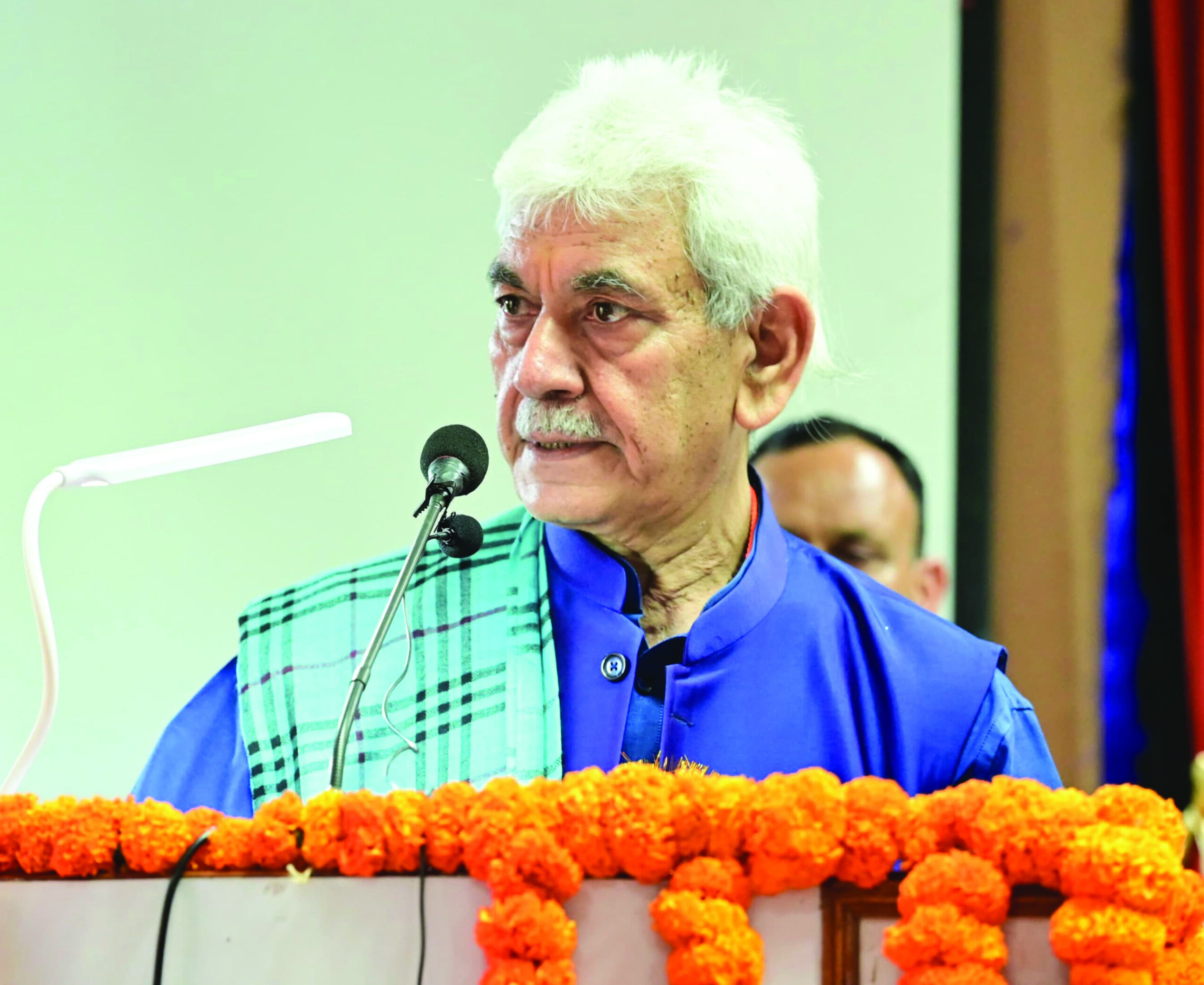
Srinagar: As Lieutenant Governor Manoj Sinha completes five years in Jammu & Kashmir, the Union Territory stands as a shining example of how determined governance can transform a region. When Sinha took charge on August 7, 2020, J&K was emerging from decades of conflict and instability. Today, it has become one of India’s most promising regions, witnessing unprecedented development across all sectors.
The economic revival has been particularly remarkable. The administration’s Industrial Policy 2022 proved to be a turning point, attracting investment proposals worth Rs 75,000 crore across diverse sectors including tourism, information technology, healthcare and manufacturing. This represented a quantum leap from previous years when security concerns had kept investors away. The establishment of 5,000 new industrial units created employment for over 150,000 local youth, addressing one of the region’s most pressing challenges.
A landmark achievement came with the UAE’s Emaar Group, developers of the iconic Burj Khalifa, committing Rs 500 crore for developing a world-class shopping mall and IT towers in Srinagar. This marked the first major foreign direct investment in J&K’s history and served as a strong endorsement of the improved business environment. The administration’s single-window clearance system became a model of efficiency, ensuring that 98% of investment proposals were cleared within 15 days.
Jammu & Kashmir’s tourism sector, the backbone of its economy, experienced its most prosperous period under Sinha’s leadership. From 2020 to 2025, the UT saw record tourist arrivals crossing millions of visitors, shattering all previous records. Hotel occupancy rates consistently touched 100% even during traditional off-season months, indicating that J&K had successfully transitioned from being a seasonal destination to a year-round attraction.
A defining moment came in May 2023 when Srinagar hosted the G20 Tourism Working Group meeting. This high-profile international event not only showcased J&K’s tourism potential to the world but also signaled the return of normalcy and stability to the region. The administration’s innovative tourism initiatives played a crucial role in this transformation.
Infrastructure development saw unprecedented progress under Sinha’s leadership. The strategic Zojila Tunnel project, which will provide all-weather connectivity between Srinagar and Ladakh, achieved 80% completion during his tenure. The Jammu Ring Road project brought dramatic improvements to the region’s transportation network, reducing travel time between key locations by 60%. Similarly, the Udhampur-Srinagar-Baramulla Rail Link transformed connectivity across the Union Territory.
The road network saw massive expansion with the construction of 2,500 km of new roads and 75 major bridges, connecting previously isolated communities to economic centers. These infrastructure projects not only improved quality of life but also created thousands of jobs during construction and will continue to boost economic activity for years to come.
The Digital J&K initiative became a model for e-governance, bringing government services to citizens’ fingertips while enhancing transparency and efficiency. A comprehensive digital transformation saw 1,028 government services made available online, covering everything from land records to driving licenses. The complete digitization of revenue records brought revolutionary changes to land administration.
The 2020 District Development Council elections marked another watershed moment in J&K’s political evolution. Conducted with remarkable transparency and participation, these elections saw a 74% voter turnout – the highest in decades for any electoral exercise in the region. Over 35,000 elected panchayat representatives became active participants in governance through innovative programs designed to strengthen grassroots democracy.
Recognizing that J&K’s future depended on its youth, the administration made youth empowerment the centerpiece of its development strategy. Comprehensive programs addressed education, employment, and entrepreneurship needs. The results were transformative with 350,000 jobs created through various schemes and initiatives.
The security landscape witnessed dramatic improvements that enabled all other development initiatives. A 73% reduction in terror-related incidents compared to 2019 created the stability needed for economic growth. The complete elimination of top terror leadership across all groups removed key obstacles to normalcy.
The administration’s focus on inclusive development ensured that the benefits of growth reached all sections of society. One hundred percent saturation was achieved in central welfare schemes like Pradhan Mantri Awas Yojana, Ujjwala, and Saubhagya. In a historic move that brought closure to decades of suffering, the administration provided government jobs to 158 families of civilians killed by terrorists.
J&K’s healthcare sector saw quantum improvements that dramatically enhanced access and quality. Two new AIIMS institutions became operational, providing world-class medical care. Seven new medical colleges increased MBBS seats from 500 to 1,300 annually, addressing the chronic shortage of doctors.
Comprehensive reforms in the education sector aligned J&K with national standards while addressing local needs. The implementation of the National Education Policy modernized curricula and teaching methods. Thirty-five new degree colleges expanded access to higher education, particularly for women and rural students.
Farmers, the backbone of J&K’s rural economy, received unprecedented support. One hundred fifty thousand farmers benefited from the Kisan Credit Card scheme, gaining access to formal credit. The promotion of organic farming across 75,000 hectares opened new premium markets for Kashmiri agricultural products.
From the depths of conflict to the heights of development, Jammu & Kashmir’s journey under LG Manoj Sinha’s leadership stands as a testament to what determined governance can achieve. As the sun sets on his tenure, it rises on a new J&K – confident, prosperous, and marching firmly toward a brilliant future. The transformation witnessed over these five years has not just changed infrastructure and economic indicators, but more importantly, it has renewed hope and rekindled aspirations among the people of this beautiful region.
For years, the terror victims in Kashmir were stifled, their pleas for justice ignored. Political regimes, instead of standing with the victims, played into the hands of Pakistan’s ISI, emboldening terrorists while leaving survivors to rot. The change began when LG Manoj Sinha decided to break the cycle of neglect. True to his word, on June 29, 2025, he visited terror victims in Anantnag, promising jobs and other help. On July 13, he visited terror victims in Baramulla, and on August 5, LG Sinha handed over 149 appointment letters to these families in Srinagar, delivering justice that had been denied for decades.
The story of Jammu & Kashmir’s transformation under LG Manoj Sinha is one of vision, determination and compassionate governance. It serves as an inspiring model for conflict-affected regions everywhere, proving that with the right leadership and policies, even the most challenging situations can be turned around for the betterment of all citizens.


