


Mohammad Hanief
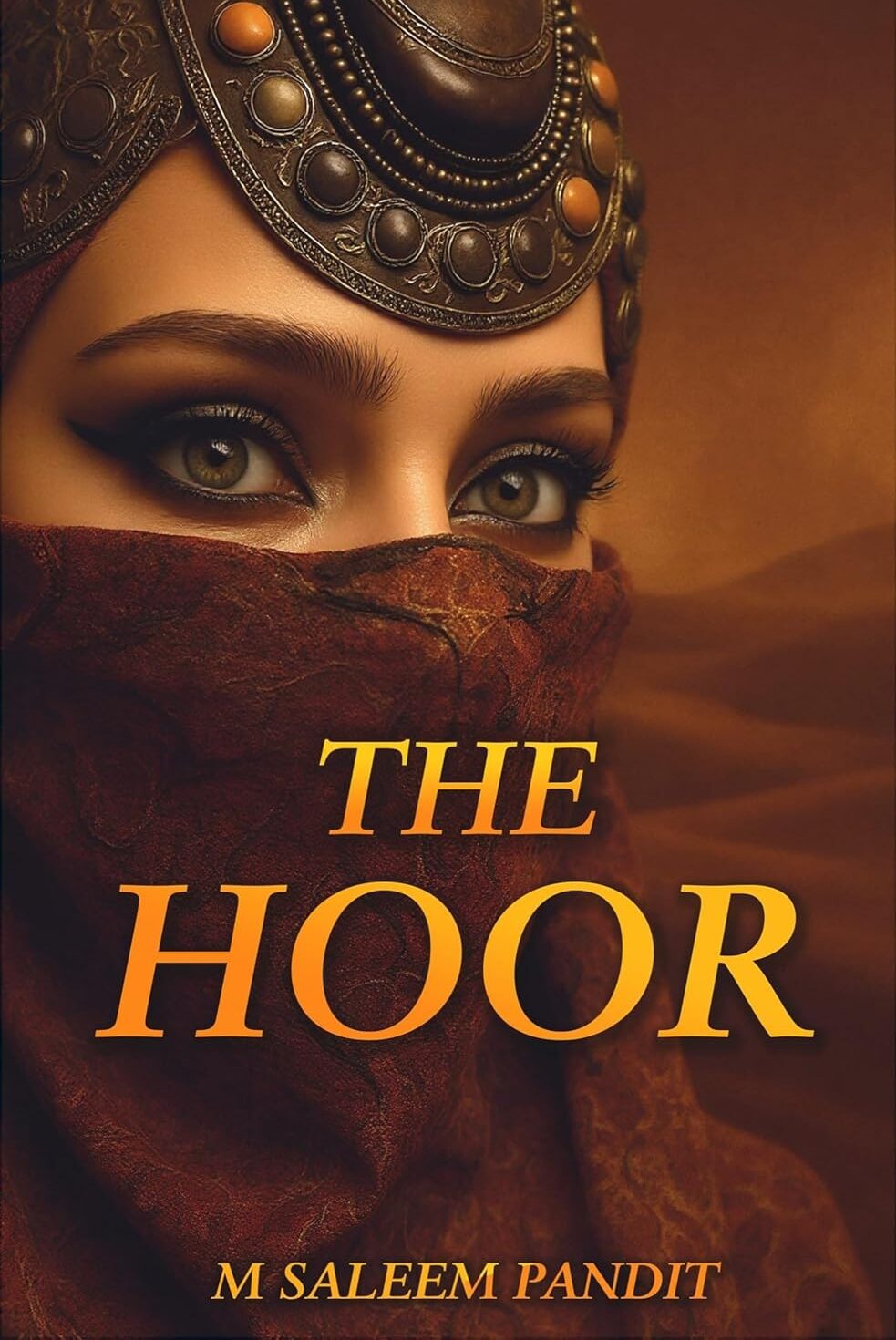
For centuries, a single story about the Islamic afterlife has travelled far and wide: that faithful Muslim men are promised seventy-two virgins in Paradise while women must settle for less. Repeated in pulpits and sensational headlines, the claim has fed stereotypes and sown quiet doubts within Muslim communities themselves. In TheHoor, journalist and scholar MSaleem invites readers to step beyond the myth and rediscover a vision of Paradise rooted in balance, dignity, and hope. His message is gentle yet powerful: God’s promise of eternal joy belongs equally to every soul.
Saleem brings to this work a rare blend of experience and empathy. A veteran journalist with more than three decades of reporting, he has earned a reputation for clarity and courage in writing about South Asian politics, religion, and society. His bylines in leading national newspapers and international outlets have consistently explored the meeting place of faith, culture, and public life. Born and raised in Kashmir, he has witnessed how religious misunderstandings can inflame conflict or breed quiet disillusionment. Over the years, his journalism has sought to counter caricatures of Islam with careful evidence and humane storytelling. These same qualities shine in The Hoor, where rigorous research meets a compassionate instinct for plain explanation, lending credibility and warmth to a subject that many either sensationalise or avoid.
The book begins with a strikingly simple reminder: the Qur’an mentions the word Hoor—luminous, pure companions—only four times, and nowhere does it attach a number. The familiar “seventy-two” comes not from the sacred text but from later anecdotes and popular imagination. By patiently tracing Quranic verses and authentic Hadiths, Saleem shows that Paradise is not a men-only reward but a realm where every believer’s deepest wishes are fulfilled. He highlights the verse promising, “They shall have therein all that they desire,” letting this sweeping assurance speak for itself and clearing away the haze of hearsay that has distorted the concept of Hoor for centuries.
From there he offers a meditation on divine justice that is both scholarly and deeply human. Women, like men, are promised everything their hearts can desire: reunion with beloved spouses, companionship if they choose it, or joys beyond anything the human mind can imagine. Where scripture is less explicit about women’s rewards, Saleem finds not neglect but compassion—a divine discretion that protects dignity and reminds readers that heavenly life cannot be limited by earthly categories. His argument resonates with the work of Muslim feminist scholars who have long urged a return to the Qur’an’s central message of equality. Thinkers such as Amina Wadud have shown that the sacred text speaks a universal language of justice. Saleem shares this instinct, though his method is more traditional, working within established commentary to demonstrate that even on its own terms Islam’s vision of Paradise is balanced and inclusive.
He brings history into view as well. Early societies were far more comfortable discussing male sexuality than female longing, and this cultural backdrop shaped how descriptions of Paradise developed, with vivid detail for men and little for women. Recognising this context does not weaken faith; instead, it deepens understanding and invites believers to read the Qur’an with both reverence and reflection. By showing how eternal principles—justice, mercy, fulfilment—were sometimes expressed in the language of their time, Saleem frees readers from the burden of literalist expectations and reminds them that divine promises transcend cultural custom.
What makes The Hoor especially moving is its tone of quiet encouragement. Saleem writes not to argue but to guide, his prose clear and warm, offering insight without condescension. He knows that confusion over the “seventy-two virgins” myth has unsettled many ordinary Muslims and has been used by outsiders to caricature Islam. His response is neither defensive nor dismissive. He simply leads readers back to the heart of the Qur’an, where the promise of divine mercy outshines every rumour. Again and again he reminds us that the ultimate goal of faith is not a specific reward but nearness to God. Righteous living, he says, is an act of love, not a transaction. Paradise is more than a catalogue of pleasures; it is the fulfilment of every pure longing and the joy of God’s presence. In this way, the book speaks not only to theological curiosity but also to the human hunger for meaning.
The significance of Saleem’s work reaches well beyond Muslim audiences. Misconceptions about Islamic teachings have long been exploited to paint the faith as hedonistic or patriarchal. By patiently debunking one of the most persistent myths, he offers a corrective that strengthens interfaith understanding. Non-Muslim readers will find in The Hoor a portrait of Islam that is spiritually profound and ethically coherent, far removed from the sensational caricatures that dominate popular discourse. For Muslims, the book provides calm reassurance. It whispers that every act of goodness matters, that no sincere heart is overlooked, and that the life to come will be shaped not by rumour but by the boundless mercy of the Creator.
Saleem’s achievement lies not only in scholarship but also in empathy. He understands that theology is lived, not merely studied, and his writing acknowledges the quiet questions of believers—especially women—who wonder whether their devotion will be equally rewarded. By addressing those concerns directly, he restores confidence in a faith whose ultimate promise is perfect justice. This human dimension gives The Hoor a rare warmth. It is not a cold academic treatise but a conversation between author and reader, steeped in reverence for scripture and compassion for human doubt.
In a time when social media amplifies divisive voices and distorts religious discourse, Saleem’s work feels especially timely. It counters the sensational with the sincere, the rumour with the researched. By returning to foundational texts and placing them in historical context, he models a way of reading that is both faithful and thoughtful—a lesson valuable far beyond the subject of Hoor. By the closing pages, the book becomes more than a correction of misunderstanding. It is an invitation—to believers to trust in God’s justice, and to non-Muslims to see a faith too often misrepresented. Saleem’s careful scholarship and compassionate spirit remind readers that Islam’s vision of the hereafter is not a competition between genders but a celebration of shared humanity.
Thoughtful, hopeful, and gracefully written, The Hoor lights a path through centuries of misunderstanding. It invites readers to see the Qur’an’s promise of eternal joy as a promise made to all. In an age eager for division, M. Saleem’s work is a quiet call to unity—and a reminder that the greatest reward of Paradise is the nearness of God Himself.
The author of this review is a senior analyst in Kashmir and can be reached at m.hanief@gmail.com
Twitter/X: @haniefmha


