


Mohammad Hanief
The preservation of cultural heritage in Jammu and Kashmir today stands at a critical juncture, as the region’s centuries-old traditions face mounting pressures from economic hardship, modernization, and shifting social priorities. At the heart of this challenge are thousands of artisans whose skills have long sustained Kashmir’s identity but whose livelihoods are increasingly under strain.
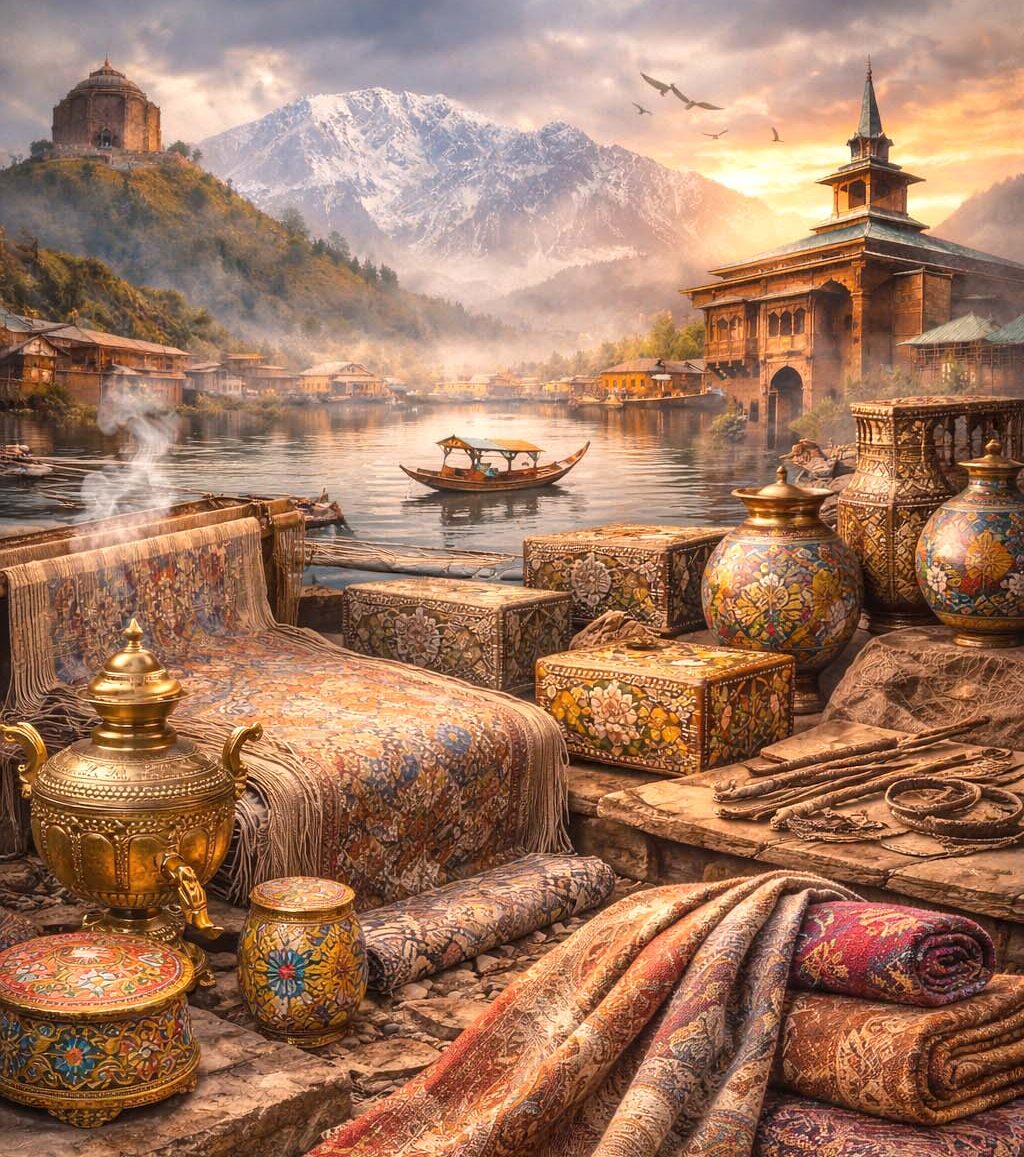
Across the Valley and the wider regions of Jammu and Kashmir, traditional crafts such as Pashmina weaving, carpet making, papier-mâché, and wood carving are not merely artistic practices but vital sources of income and cultural continuity. Yet, for many artisans, these crafts no longer guarantee economic security. The gap between the labor invested and the financial return continues to widen, forcing many to reconsider their ancestral professions.
One of the most pressing concerns is the declining profitability of traditional crafts. Handmade products, which require weeks or even months of meticulous effort, often fetch prices that do not reflect the skill and time invested. The dominance of middlemen in the supply chain further reduces artisans’ earnings, leaving them with only a fraction of the final market value. In many cases, artisans struggle to meet basic household expenses, making it difficult to sustain their craft as a full-time occupation.
Adding to these challenges is the rising cost and limited availability of raw materials. The production of authentic Pashmina shawls, for instance, depends on fine wool that has become increasingly expensive and difficult to procure. Similarly, traditional dyes, quality wood, and other essential materials used in crafts across Jammu and Kashmir are becoming scarce. This forces artisans to either compromise on quality or absorb higher costs, both of which undermine the sustainability of their work.
The impact of these economic pressures is evident in the changing aspirations of the younger generation. Many young people, even those from families with a long history of craftsmanship, are reluctant to continue in these professions. With limited financial stability and growing exposure to alternative career opportunities, they are opting for more secure sources of income. This gradual shift threatens the transmission of traditional skills that have been preserved for generations through hands-on learning and practice.
Despite these hardships, recent trends indicate a growing awareness about the importance of cultural preservation. Digital platforms have emerged as a significant tool in this regard, enabling artisans to reach wider markets and connect directly with customers. Social media and e-commerce have allowed some craftsmen to showcase their work globally, reducing dependence on intermediaries and increasing visibility. However, access to digital tools and literacy remains uneven, particularly in rural areas, limiting the benefits for many artisans.
Tourism has also played a dual role in shaping the future of Kashmir’s cultural heritage. The resurgence of tourism in the region has created new opportunities for artisans to market their products and engage with visitors interested in authentic cultural experiences. Craft exhibitions, local markets, and heritage tours have become important platforms for promoting traditional arts. At the same time, the commercialization driven by tourism often prioritizes quantity over authenticity, leading to the mass production of items that lack the originality and craftsmanship of traditional work.
Government initiatives and institutional efforts aimed at supporting artisans have shown some positive impact, but challenges in implementation persist. Financial assistance schemes, training programs, and promotional campaigns have been introduced to revive traditional crafts and improve market access. However, limited awareness, bureaucratic hurdles, and inconsistent execution often prevent these measures from reaching artisans at the grassroots level. There remains a need for more targeted and transparent policies that address the specific needs of different craft sectors across Jammu and Kashmir.
Beyond economic factors, broader social and environmental changes are also influencing cultural preservation. Rapid urbanization has altered traditional ways of life, with modern construction replacing indigenous architectural styles and reducing the demand for traditional skills. Changing consumer preferences have further contributed to the decline in everyday use of handcrafted items, affecting the relevance of certain crafts.
Climate change has emerged as an additional challenge, subtly impacting the ecosystem that supports traditional practices. Variations in weather patterns affect the availability and quality of raw materials, while environmental degradation threatens the natural landscapes that have historically inspired Kashmiri art and culture. These changes add another layer of uncertainty to an already fragile system.
Amid these challenges, the resilience of artisans remains a defining feature of Kashmir’s cultural landscape. Many continue to practice their craft despite limited returns, driven by a sense of pride and a commitment to preserving their heritage. Their work reflects not only technical skill but also a deep cultural memory that connects past generations with the present.
Encouragingly, there is a gradual shift towards integrating tradition with modernity. Efforts to introduce design innovation, improve product quality, and adapt to contemporary markets are helping some crafts regain relevance. Collaborations between artisans and designers, along with the promotion of sustainable and ethical products, are opening new possibilities for growth.
Education and awareness also play a crucial role in this process. By incorporating cultural studies into academic curricula and promoting local heritage through community initiatives, it is possible to foster a deeper appreciation for traditional crafts among younger generations. Such efforts can help transform cultural preservation from a passive concern into an active societal responsibility.
Ultimately, the preservation of cultural heritage in Jammu and Kashmir requires a holistic and sustained approach. Economic support for artisans, improved market access, technological integration, and policy reforms must work in tandem to create an environment where traditional crafts can thrive. Equally important is the role of consumers, whose choices can influence demand and support authentic craftsmanship.
The future of Kashmir’s cultural heritage depends not only on protecting monuments and traditions but on ensuring the survival and dignity of the artisans who sustain them. Their struggles highlight the urgent need for meaningful intervention, while their resilience offers hope for renewal.
In safeguarding its crafts and traditions, Jammu and Kashmir is not merely preserving its past—it is shaping a cultural legacy that can endure in a rapidly changing world.
The author is a senior analyst and can be mailed at m.hanief@gmail.com
Twitter/ X: @haniefmha


