


Mohammad Hanief
The observance of Earth Day this year witnessed widespread participation, reflecting a growing global awareness of environmental issues. From large-scale marches in cities to grassroots campaigns in smaller towns and rural communities, the day brought together governments, institutions, and citizens in a collective expression of concern. In India, schools, universities, and civil society organizations played an active role in mobilizing youth through eco-clubs, awareness drives, and community outreach programmes. In ecologically sensitive regions, including parts of the Himalayan belt, plantation drives and conservation efforts highlighted the urgency of protecting fragile ecosystems.
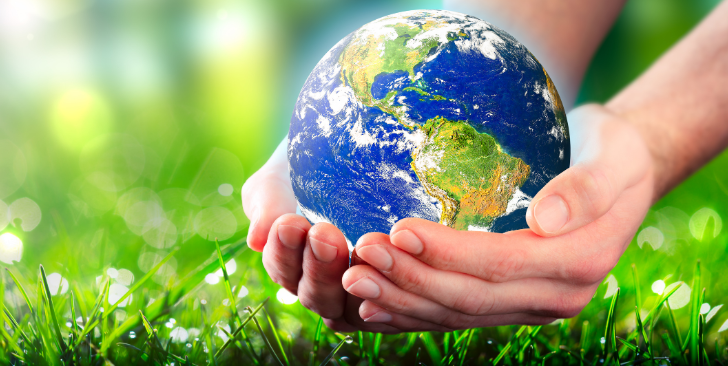
Record-breaking heatwaves, rapidly melting glaciers, worsening air quality, and increasingly erratic weather patterns are defining the global environmental landscape in 2026. Across continents, the effects of climate change and ecological degradation are no longer distant warnings but immediate, lived realities affecting millions. It is against this backdrop of intensifying crises that Earth Day 2026 was observed on April 22, with its theme of collective action and shared responsibility serving less as a symbolic message and more as an urgent call to confront a deepening planetary emergency.
The central message of Earth Day 2026—collective responsibility—resonated strongly across platforms. It emphasized that environmental challenges transcend national boundaries and require coordinated global action. Digital platforms further amplified this call, enabling millions to participate virtually by sharing ideas, pledges, and sustainable practices. However, even as the world united in purpose, the stark reality remained that environmental degradation continues to outpace global efforts to contain it.
Air pollution remains one of the most immediate and visible threats, particularly in South Asia. Many urban centers continue to experience dangerously high levels of particulate matter, with PM2.5 concentrations frequently exceeding safe limits. Rapid urbanization, rising vehicular emissions, industrial activity, and construction dust have significantly degraded air quality. Seasonal agricultural burning further exacerbates the situation, often resulting in dense smog that disrupts daily life. The health consequences are severe and far-reaching, contributing to respiratory illnesses, cardiovascular diseases, and a growing number of premature deaths.
Climate change, driven by persistent greenhouse gas emissions, continues to intensify despite global commitments to reduce carbon footprints. Atmospheric carbon dioxide levels remain at record highs, reinforcing the greenhouse effect and accelerating global warming. The early months of 2026 have already witnessed extreme weather events across various regions, underscoring the escalating instability of the Earth’s climate system.
Prolonged heatwaves have affected large parts of Asia and Europe, pushing temperatures to dangerous levels and placing immense strain on public health systems and energy infrastructure. At the same time, unseasonal rainfall and flash floods have caused widespread destruction in several regions, displacing communities and damaging critical infrastructure. In contrast, drought conditions in other parts of the world have disrupted agricultural cycles, threatening food security and livelihoods. These contrasting extremes highlight the unpredictable and increasingly volatile nature of climate patterns.
The Himalayan region offers one of the most alarming indicators of climate change. Glaciers, often referred to as the “water towers of Asia,” are retreating at an accelerated pace. This poses significant risks for millions of people who depend on glacial-fed rivers for water. In the short term, the melting increases the risk of glacial lake outburst floods, while in the long term it threatens water availability. The consequences of this dual risk are particularly concerning for countries like India, where large populations rely on these critical water sources.
Water stress is emerging as a defining challenge of the current decade. Groundwater levels in many regions are declining rapidly due to over-extraction, while surface water bodies are increasingly polluted by industrial discharge, untreated sewage, and agricultural runoff. This combination of scarcity and contamination is limiting access to safe drinking water and placing additional pressure on already stressed ecosystems.
Plastic pollution continues to escalate, particularly in marine environments. Despite increased awareness and policy measures, millions of tonnes of plastic waste still enter oceans every year. Marine life is severely impacted, with many species ingesting plastic or becoming entangled in debris. Over time, plastics degrade into microplastics, which have now been detected in food chains, drinking water, and even human tissues. The long-term implications of this widespread contamination remain uncertain but deeply concerning.
Deforestation and land degradation further compound the environmental crisis. Forests, which play a critical role in carbon sequestration and biodiversity conservation, are being cleared at an alarming rate to accommodate agriculture, infrastructure, and urban expansion. This not only contributes to climate change but also results in habitat loss and declining biodiversity. Soil degradation, driven by unsustainable agricultural practices and excessive chemical use, threatens long-term agricultural productivity and food security.
Despite the scale of these challenges, Earth Day 2026 also highlighted areas of progress and cautious optimism. Renewable energy continues to expand rapidly, with solar and wind power emerging as viable alternatives to fossil fuels. Several countries have announced ambitious climate targets, including commitments to achieve carbon neutrality in the coming decades. Advances in green technologies, sustainable agriculture, and waste management are providing practical solutions to reduce environmental impact.
At the community level, a gradual shift toward sustainable living is becoming increasingly evident. Individuals are adopting eco-friendly practices such as waste segregation, recycling, and reducing the use of single-use plastics. Educational institutions are integrating environmental awareness into their curricula, while youth-led movements continue to play a pivotal role in advocating for climate action and holding decision-makers accountable.
However, experts caution that these efforts, while encouraging, are not sufficient to match the scale and urgency of the crisis. The gap between commitments and implementation remains significant. What is needed is not incremental change but systemic transformation—rethinking economic models, altering consumption patterns, and embedding sustainability into every aspect of governance and development.
For developing nations like India, the challenge lies in balancing economic growth with environmental sustainability. Development remains essential for improving living standards, but it must be pursued in a manner that does not compromise ecological integrity. This requires innovative policy approaches, effective governance, and enhanced international cooperation to ensure access to resources, technology, and financial support.
As the world reflects on Earth Day 2026, the message is clear and uncompromising. Environmental degradation is no longer a distant threat; it is a present reality shaping the future of humanity. The interconnected nature of these challenges demands coordinated, sustained, and collective action at all levels.
Earth Day must therefore be seen not as a symbolic observance, but as a continuous call to action. The responsibility to protect the planet lies with governments, institutions, and individuals alike. Every decision—whether related to energy use, consumption, or lifestyle—has consequences for the environment.
The planet continues to sustain life, but its capacity is not limitless. The defining challenge of our time is to ensure that collective intent is translated into meaningful and lasting change. In the face of escalating environmental crises, one truth stands above all: the future of the Earth depends on what humanity chooses to do next.
The author is a senior analyst and can be mailed at m.hanief@gmail.com
Twitter/ X: @haniefmha


