


Dr. Reyaz Ahmad
Why glossy campuses can hide an uncomfortable truth—and why fixing it is in everyone’s interest
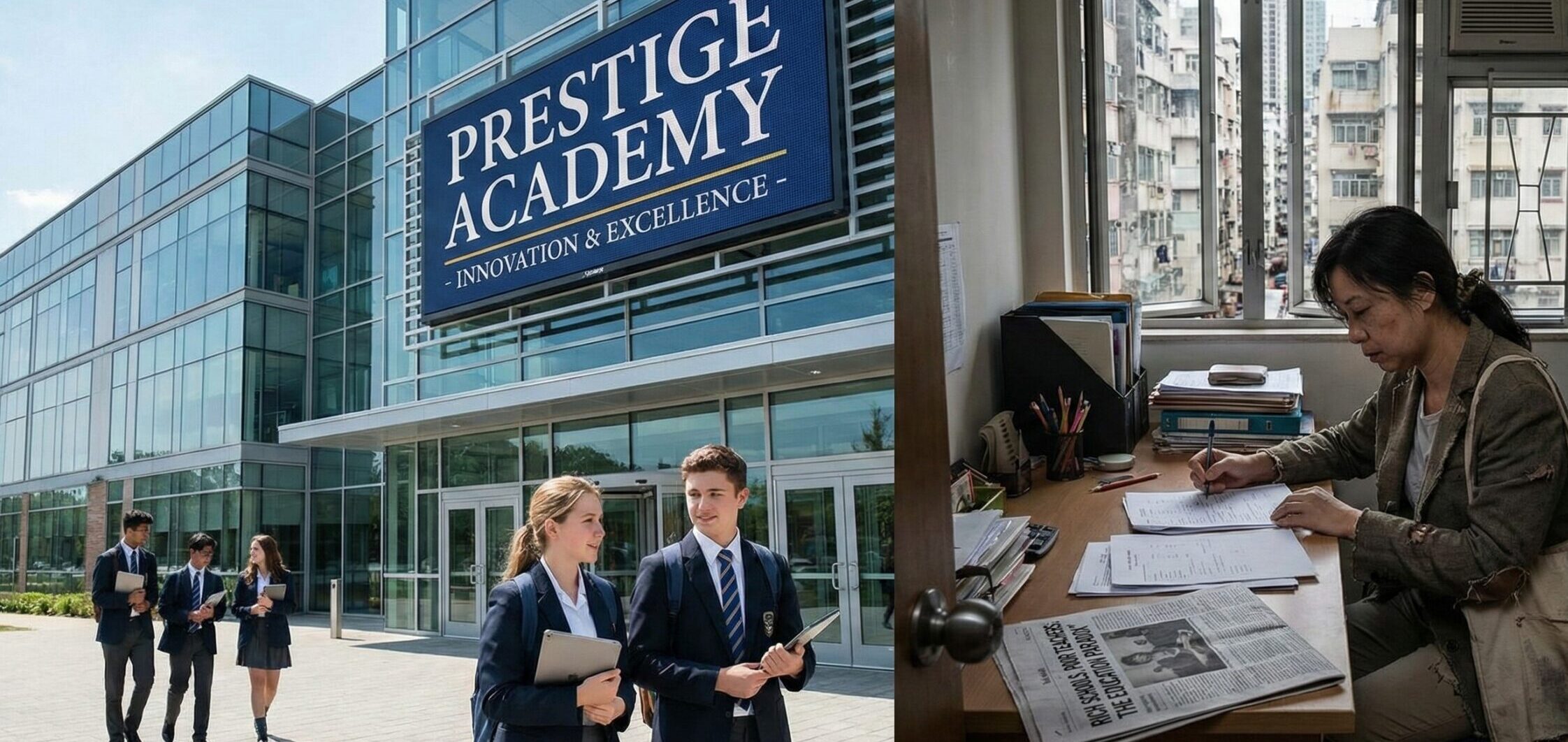
Walk past many private schools today and you may feel you are looking at a corporate headquarters rather than a place of learning. Tall gates, air-conditioned corridors, smart boards, glossy brochures, international affiliations, and a fee structure that signals prestige. Parents often interpret these visible signals as proof of quality. In many cases, private schools do deliver good outcomes—structured routines, strong discipline, and competitive results.
But behind this polished image lies a contradiction we rarely discuss in public: many teachers in private schools remain underpaid, overworked, and professionally insecure.
On the other side of the spectrum, government schools in many regions may struggle with infrastructure constraints—crowded classrooms, limited resources, aging buildings, or inconsistent facilities. Yet government teachers, by and large, enjoy job security, regulated pay scales, retirement benefits, and social dignity that private school teachers often lack.
This is the education paradox of our time: some schools look rich, while their teachers live poor; some schools look poor, while their teachers live secure. The question is not about praising one sector and blaming the other. The question is more fundamental: Are we valuing education—or just appearances?
The hidden economy of “low-cost” teaching
Let us speak plainly. A teacher’s salary is not just a personal matter—it is an education quality issue. When private schools keep salaries low, they may reduce costs and increase margins or invest in marketing, infrastructure, or expansion. The school’s brand rises, but the teacher’s status remains fragile.
In many places, private school teachers face conditions that would surprise those who pay premium fees. They are asked to take extra classes, manage administrative duties, handle co-curricular programs, write reports, prepare “inspection files,” support admissions, and participate in weekend events—often without additional compensation. Many works under short-term contracts, and the fear of non-renewal becomes a silent tool of control.
A teacher who feels insecure is less likely to innovate in the classroom. A teacher who is underpaid may take tutoring after hours just to manage household expenses. A teacher who is exhausted cannot deliver joyful learning. Over time, these pressures do not stay confined to staff rooms—they spill into the learning experience of children.
In any profession, sustained high performance requires stability and dignity. In teaching, it is even more important because the “product” is not a commodity; it is the growth and confidence of young minds.
The “salary on paper” problem
Another uncomfortable reality is that salary practices in some private schools are not always transparent. Reports have circulated for years about cases where salaries are shown on paper as compliant with regulations, paid formally through cheques or bank transfers, and then a portion is allegedly taken back in cash. Even where such practices are not widespread, the perception itself damages trust and discourages talented educators from staying in the profession.
Whether these cases are occasional or common, they point to a structural vulnerability: the teacher in a private school often lacks bargaining power and lacks institutional protection. Job insecurity makes it difficult to raise concerns. Teachers fear being labelled “non-cooperative” or “not aligned with the school culture.” In a profession built on moral authority, this is a painful contradiction.
Government schools: modest buildings, stable lives
Government schoolteachers are not automatically “better” teachers, and government schools are not automatically “worse” schools. The reality is varied. Yet, one cannot deny that government teachers typically operate within clearer service rules and pay structures. This stability supports long-term professional planning: training, upskilling, and continuity in career.
That said, government schools also carry challenges—bureaucratic processes, transfer policies, political pressures in some areas, and sometimes a mismatch between policy design and classroom reality. Still, when the system provides basic dignity and predictable compensation, it strengthens the idea that teaching is a respected career.
So why does the private sector—often charging higher fees—struggle to ensure comparable respect and security for its teachers?
The myth: “Parents pay for facilities, not teachers”
Many private schools invest heavily in what parents can immediately see: buildings, buses, uniform branding, digital platforms, and extracurricular programs. Teacher welfare is less visible. It does not appear on billboards. It cannot be shown in a brochure the way an auditorium or smart lab can.
But parents should remember a simple truth: a school is not a building; it is the people inside it. A smart board cannot replace a motivated teacher. A well-designed campus cannot compensate for high staff turnover. A premium fee does not guarantee premium learning if the teacher is stressed, underpaid, and fearful.
In education, the “software” matters more than the “hardware.” The teacher is the software.
NEP 2020: visionary, but silent where it hurts
The National Education Policy (NEP) 2020 is widely appreciated for its vision—holistic development, foundational literacy and numeracy, flexibility, vocational integration, teacher education reforms, and a renewed focus on learning outcomes. It talks about teacher training and professional standards. Yet many observers have noted that it remains largely quiet on the concrete issue of teacher salaries and service conditions in private schools.
This silence matters. Because without enforceable minimum standards for pay, workload, and job security, teacher development becomes a slogan rather than a lived reality.
A nation cannot claim to transform education while leaving a large portion of its teaching workforce in uncertainty. If we want quality education, we must treat teacher welfare as a core pillar, not an optional add-on.
Why this is not just a teacher issue
Some may argue: “If teachers are unhappy, they can switch jobs.” But education is not like a typical corporate sector where switching is easy and stable. The cost of teacher instability is paid by children and parents.
When teachers leave frequently, students lose continuity. Learning becomes fragmented. School culture becomes transactional. Even the best curriculum fails without stable delivery. Moreover, low pay discourages talented graduates from entering the profession. Over time, teaching becomes a “last option” rather than a respected aspiration. That is how a country quietly underinvests in its future.
The paradox also creates an ethical tension: when schools charge high fees but compensate teachers poorly, a trust gap emerges. Parents feel they are paying for quality; teachers feel they are carrying the burden without recognition. No education system can sustain itself on such imbalance.
A way forward: four reforms that can start now
If we are serious about solving this paradox, we need practical steps—not only moral appeals.
1) Fair pay as a minimum standard
Governments and regulatory bodies should ensure that private school teacher salaries meet clear minimum benchmarks aligned with qualifications and experience. “Cost-saving” should not mean “teacher exploitation.”
2) Transparent salary structures
Schools should publish salary bands and service rules, just as many organizations publish pay scales. This will reduce under-the-table practices and build credibility with both teachers and parents.
3) Stronger monitoring and grievance mechanisms
Regulation should not be limited to infrastructure, safety, and examination results. It must include teacher welfare audits, anonymous complaint channels, and meaningful penalties for non-compliance.
4) Professional dignity and job security
Contracts should protect teachers from arbitrary dismissal and ensure reasonable workload limits. A teacher who lives under constant fear cannot build confident learners.
The conclusion we must not avoid
A strong education system cannot be built on weak foundations—and teachers are the foundation.
If we want better learning outcomes, better values, and better futures, we must treat teaching as a dignified profession in every sector: private or government. Fancy infrastructure can impress visitors, but only a respected teacher can shape a generation.
So, the real question remains: Will we keep celebrating schools for their appearances, or will we start measuring schools by how they treat their teachers?
Because a nation that underpays its teachers is not saving money. It is underinvesting in its future.
Author Can Be Mailed At reyaz56@gmail.com


