


Mohammad Hanief
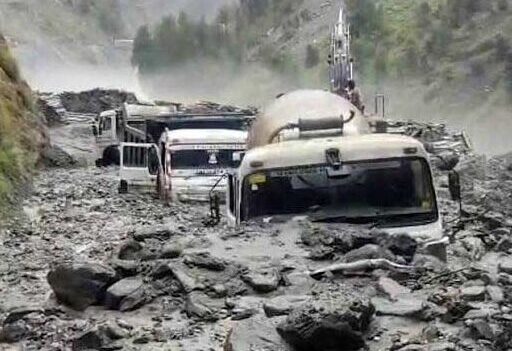
The summer of 2026 brought more than seasonal change to Jammu and Kashmir—it brought a series of devastating cloudbursts, flash floods and extreme weather events that left behind a trail of destruction across the Himalayan region. From the rugged mountains of Kishtwar and Doda to the picturesque landscapes of Pahalgam and vulnerable settlements across the Jammu and Kashmir divisions, sudden torrents of rain transformed mountain streams into destructive floods within minutes. Roads were buried under debris, homes and agricultural land were washed away, and thousands of residents found their lives disrupted by a changing climate that is becoming increasingly difficult to ignore.
The disasters witnessed this year are not isolated incidents. Rather, they are part of a disturbing climatic trend that has gradually emerged across Jammu and Kashmir over the past decade. The increasing frequency of cloudbursts, flash floods, landslides, prolonged dry spells, unprecedented heat waves and erratic rainfall patterns reflects the growing climate sensitivity of the western Himalayas. Climate change is no longer a distant possibility for the region—it is a lived reality unfolding across one of the world’s most fragile mountain ecosystems.
A cloudburst is an intense spell of rainfall concentrated over a very small geographical area, usually lasting less than an hour. During such an event, rainfall can exceed 100 millimetres within a short period, overwhelming the land’s ability to absorb water. The result is a sudden surge of runoff that races downhill with enormous force, carrying mud, boulders, uprooted trees and debris. In the steep valleys of Jammu and Kashmir, these torrents rapidly transform into destructive flash floods capable of sweeping away everything in their path.
The geography of Jammu and Kashmir makes it particularly vulnerable to such disasters. The Himalayan slopes are steep, rivers are fast-flowing and numerous villages are located close to mountain streams and flood-prone areas. Roads frequently cut through unstable hillsides, while settlements have increasingly expanded along riverbanks and natural drainage channels. When intense rainfall strikes, water gathers momentum almost instantly, triggering landslides and debris flows that can isolate entire communities within minutes. In mountain regions where accessibility often depends upon a single road network, even minor disruptions can have serious humanitarian and economic consequences.
The cloudbursts and intense rainfall events witnessed during 2026 demonstrated this vulnerability with alarming clarity. Multiple incidents affected districts including Kishtwar, Doda, Ramban, Reasi, Poonch and parts of the Kashmir Valley. Flash floods damaged homes, washed away roads and bridges, disrupted power and communication networks, inundated agricultural land and cut off remote villages from essential services. Important highways connecting mountainous districts were repeatedly blocked by landslides, delaying rescue and relief operations. In several areas, residents were forced to evacuate their homes as floodwaters inundated settlements and caused extensive damage to public infrastructure.
For local communities, the destruction extended far beyond damaged buildings. Agricultural fields were buried beneath mud and stones, irrigation channels were destroyed and livestock was swept away by raging waters. Farmers lost standing crops, while orchards and vegetable farms suffered severe damage. For families whose livelihoods depend upon agriculture and livestock, these disasters erased months of hard work within a matter of minutes. In mountain economies where climatic stability remains central to livelihoods, the consequences of such disasters often persist long after floodwaters recede.
The tourism sector, one of Jammu and Kashmir’s principal economic pillars, has also become increasingly vulnerable to the impacts of extreme weather events. Cloudbursts, flash floods, landslides and prolonged spells of heavy rainfall have repeatedly disrupted transportation networks and public services, highlighting the growing challenge of ensuring safety and resilience in mountainous regions.
Such events affect not only infrastructure but also the livelihoods of thousands of people engaged directly and indirectly in tourism-related activities. The increasing unpredictability of weather patterns underscores the urgent need for climate-resilient infrastructure, effective disaster management strategies and environmentally sustainable planning that can withstand the realities of a changing climate.
What makes the events of 2026 particularly significant is that they are not isolated occurrences. Over the past decade, Jammu and Kashmir has witnessed a noticeable increase in extreme weather events. While cloudbursts have always occurred in the Himalayan region, they were once relatively infrequent and generally confined to isolated mountain pockets.
Today, reports of cloudbursts, flash floods, landslides and episodes of intense rainfall are becoming increasingly common across both the Jammu and Kashmir divisions. Their frequency and geographical spread suggest that these disasters are emerging as recurring manifestations of a changing climate rather than exceptional occurrences.
The devastating floods of September 2014 marked a turning point in public awareness regarding climate-related disasters in Jammu and Kashmir. Although those floods resulted from prolonged heavy rainfall rather than a cloudburst, they exposed the vulnerability of urban planning, drainage systems and settlements constructed along floodplains and riverbanks.
Since then, almost every monsoon season has witnessed incidents of flash floods, landslides or intense rainfall somewhere in the region. More recently, Jammu and Kashmir has experienced unprecedented summer heat waves, shrinking snow cover, changing precipitation patterns, unusually warm winters and erratic monsoonal behaviour—all of which point towards significant climatic transformations occurring across the western Himalayas.
Scientists attribute this trend to a combination of climatic and human-induced factors. Rising global temperatures have increased the atmosphere’s capacity to retain moisture. When moisture-laden winds encounter the Himalayan ranges, they rise rapidly, cool and release enormous volumes of rainfall over small geographical areas.
The interaction between monsoonal systems and western disturbances further enhances the possibility of intense precipitation across the western Himalayan region. Climate scientists have repeatedly warned that mountain ecosystems are warming faster than many lowland regions, making the Himalayas particularly susceptible to extreme weather phenomena.
Human activities have significantly amplified the impact of these natural events. Rapid urbanisation, indiscriminate road cutting, deforestation, quarrying and construction along riverbanks have weakened the fragile Himalayan ecosystem. Forests that once absorbed rainfall and stabilised mountain slopes have diminished, while encroachments upon natural drainage channels have restricted the free flow of floodwaters.
Consequently, rainfall that might once have caused limited damage now results in devastating floods, landslides and widespread disruptions. Development undertaken without adequate ecological assessments has further heightened the vulnerability of mountain communities to climate-induced disasters.
The recurring disasters underline the urgent need for stronger disaster preparedness. Although weather forecasting has improved considerably, predicting the precise location and timing of a cloudburst remains extremely difficult because such events develop rapidly over very small areas.
Expanding Doppler weather radar coverage, installing additional automatic weather stations and strengthening community-based early warning systems can provide valuable time for evacuation and emergency response. Equally important is the dissemination of timely and accessible weather advisories that enable communities to respond effectively during emergencies.
Infrastructure planning must also adapt to the realities of a changing climate. Roads, bridges, drainage systems and public buildings in mountainous regions should be designed to withstand extreme rainfall and landslides. Environmental regulations that discourage construction in ecologically sensitive and flood-prone areas must be strictly enforced, while forests, wetlands and natural drainage systems should be protected and restored as indispensable ecological buffers against climatic extremes.
The lessons of 2026 extend far beyond disaster response. They compel us to rethink how development is pursued within one of the world’s most fragile mountain ecosystems. Sustainable land-use practices, afforestation, watershed conservation and scientifically planned infrastructure must become central to policymaking in Jammu and Kashmir. Local communities should be empowered through disaster awareness programmes, regular evacuation drills and emergency response training so that they are better prepared when nature strikes.
(The author is a senior analyst and environmentalist. Feedback can be sent tom.hanief@gmail.com. Twitter/X: @haniefmha)


